February 21st, 2017
When I first started listening to the blues, I found myself traveling back and forth between worlds. It was a bit like changing my diet. I remember times when I ate a lot of candy bars and fruit would taste weird, like it did not belong in my body. Or like it was a pale substitute for the concentrated sugar rush of chocolate and caramel… Then I would swear off sugar for a while and my taste buds would change and I would get used to apples and peaches and actually crave them, and then a snickers bar would taste weird and too sweet.
There seems to be some kind of audio taste buds that resist going from heavy blues to to other forms of music that have a very different vibe. When It comes to playing the blues, really going down past the superficial levels into the depths of the music, I’ve found in my own life that I had to immerse myself to the point where I would instinctively start avoiding other kinds of music.
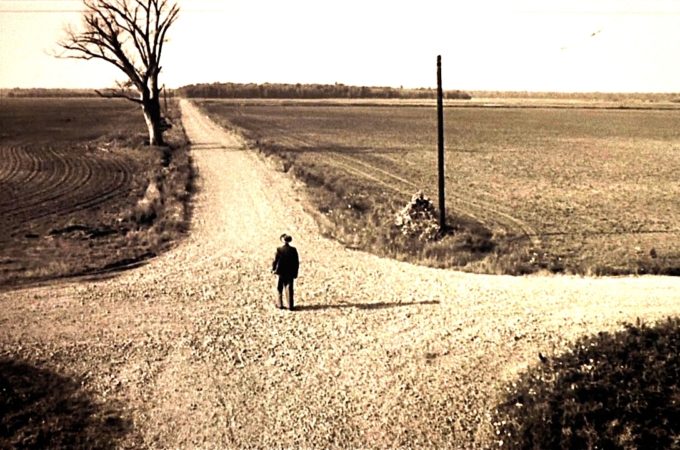
I think I finally figured out what was going on. I had to get completely away from the gravitational pull of the major scale in order to live in this other world long enough to start claiming my own form of dual citizenship.
It is like the difference between studying German once a day for an hour when you live in Cleveland Ohio and moving to Berlin and getting a job somewhere where you have to understand German or you will get fired.
Eventually you will be able to toggle between German and English, but to add the German to your mind – body operating system you have to get away from the gravitational pull of English for a while. It just scrambles your signals…
And so it was for me – learning blues meant living with the sounds around me all the time. The greats – Muddy, Little Walter, Sonny Boy Williamson I & II, all the usual suspects plus anyone else that came along that had the mojo.
But there is one more element that I have developed a great respect for and that is the physical process of playing the blues scale. There is something about getting really good at playing those six notes in every possible combination you can come up with that will make you feel like you are finally starting to inhabit the Blues instead of just visiting from time to time.
The process of playing the Blues Scale notes in sequence and then recombining the notes as many different ways as you can think of can become an obsession that will change the way you feel inside and the way you listen to music.
I did not grow up in a blues culture. I’m making up for lost time by building reflexes into my system through massive repetition. Now when I go back to listening to Blues, I can hear things that used to get away from me.
I put a video together on ways to practice and explore the blues scale -You can download the tab here: blues scale tabs Grab a harmonica in the key of A and check it out… here it is:
Please take a moment to leave a comment below if you have ideas / lesson requests- thanks!
24 Comments
Bob
February 24, 2017 - 5:02 pmThank you for this Richard, it has reached me at the exact time I need it.
Mel
February 25, 2017 - 3:17 pmThanks for breaking the process down so clearly, and especially for pointing us to the 1% that is most productive. This is a case where I want to stand with the 1 % ! It’s so much easier to stay motivated when the payoff is great.
Sandy
February 24, 2017 - 5:06 pmGood post Richard.
I had to abandon the diatonic for a long time when learning the chromatic because my signals were way too scrambled to switch from one to the other. Finally I can live in both countries. Sandy
Richard Sleigh
February 25, 2017 - 9:17 amThats great – you can also approach the chromatic from a diatonic perspective. Jimmy Gordon showed me that you can use the various positions on the chromatic by exploring them like you are playing some kind of weird marine band. Using the pentatonic scales that sit on the harp with no button moves really gives you a beach head in C, Dm, Em, F, G, Am plus related slide in scales on a C Chromatic.
Denis Green
February 24, 2017 - 5:31 pmThis is good tuition, Richard. Thanks a lot.
Tom
February 24, 2017 - 7:33 pmGreat, same thing n 3rd pos. Would be great.
Richard Sleigh
February 25, 2017 - 9:11 amOK – I’ll figure out a way to do something with 3rd – you have a complete blues scale for two octaves in 3rd, plus minor pentatonic all the way up and down. It is no wonder it is such a powerful position for playing blues…
Gene Williams
February 24, 2017 - 9:21 pmI have recently tried my hand with some blues so your timing is great, Richard!
Gene W.
Scott Thomas
February 25, 2017 - 12:14 amThanks for this, Richard – it’s timed perfectly for me, too. I’m a 70-year old harp hack who’s just rededicated myself to working on the stuff that made me pick up a harmonica 7 years ago. This is a fine article & tutorial.
Richard Sleigh
February 25, 2017 - 9:10 amGlad you find it useful – this shit will keep you young, so keep it up!
Jerry Eisner
February 25, 2017 - 1:48 amExcellent tutorial, Richard. I get a lot out of playing scales and yet don’t do it enough. The idea of doing this exercise to be able to get the blues notes from all directions is right on. I enjoyed your comments about the overblows and overdraws. I’m still learning them, but your attitude was both humorous and reassuring.
Richard Sleigh
February 25, 2017 - 9:08 amHi Jerry,
Thanks! – I am not opposed to overblows but I use them strategically and only when I am convinced I can depend on them. I think the 6 overblow is very useful but the 7 overdraw for me is very dicey.
Nazarius Manoharan
February 25, 2017 - 2:45 amThanks Richard once again for your very useful and poignant insights, which can only come from a man who’s been on the path for a while. I have committed to a month of just staying in Germany, translated as staying with the blues scale and keeping away from the major scales for a while.
Richard Sleigh
February 25, 2017 - 9:06 amCool! let me know how it goes.
Geoffrey Goldberg
February 25, 2017 - 3:03 amThanks Richard. Great stuff!
Dirk Thomas
February 25, 2017 - 12:40 pmThanks, Richard. This gives me something concrete to practice. If only you could give me the motivation and character to do that. You sound really good, by the way. Tone quality and fluency to strive for.
Richard Sleigh
February 25, 2017 - 3:35 pmThanks, Dirk,
I’ve had plenty of struggles with motivation. Like daily. I think everybody does. One of the reasons I write and post videos is that it forces me to come up with something. There are some terrific books on practice and how to make it a part of your life that feels good. I’ll post more on that in the future. One of my favorites is “The Practicing Mind” by Thomas Sterner
Tall Paul
February 25, 2017 - 9:09 pmThe private lessons are valuable. Keep them coming. The reed replacement tool is superb.
osmar
February 25, 2017 - 9:10 pmthank you Richard!!!!!!from Brazil!!!!!!!!!
Richard Sleigh
February 26, 2017 - 8:25 amI got the following question from one of the folks who read this post & I thought I would answer it here so everyone who has this type of question could benefit from my grizzled veteran of harmonica tech wars perspective on setting up harps….
Hi Richard- Thanks for making this video. I’m a longtime owner of your book and videos on turbocharging, tuning, replacing reeds etc. Is there a place within the material you have released that goes specifically into the theory of tuning/gaping say the 2 and 3 and the 9 and 10 holes for smoother, better bending?
Answer – In my “Hot Rod Your Harmonicas” DVDs I go into great detail on how to look at reeds to improve bending, and I can’t go into that level of detail here, but – here are the basics:
– the bends in holes 2 & 3, 9 & 10 are critical to having a harp that you can play the blues scale on in 1st, 2nd, and 3rd position, so putting some extra time and care into those reeds is an excellent way to approach harp customizing.
– Remember that for bending (or oblos) – that reeds work in pairs. When you bend in holes 2 & 3, the blow reed is the one that creates the new notes. If you want to do a quick job of increasing the response of bends( that is, tweak the harp without removing the reed plates from the comb), make the blow reeds in holes 2 & 3 closer to the reed plate – decrease the offset , or the distance between the reed and reed plate by pushing the reed into the slot to the point where it ends up re-set closer to the reed plate. Start with very light pressure, test by plinking or playing, and then keep going till you get it closer without it sticking under normal pressure when you play the blow note.
Now try the bend again – is it easier? Not good enough yet? – To get more, lower the draw reeds, try again. You can also do light burnishing or embossing on half to two thirds of the draw reed without taking the reed plates off the comb. LIGHT – once again , start with very light pressure and if you check frequently, you will get to the point where the reed just begins to hit the edge you are creating by burnishing. Plink the reed a lot and then play the hell out of the reed to knock the burrs away. If this doesn’t work, then you have to take the harp apart and look at where the reed is hitting the side of the slot and re- center or scrape away burrs.
In the Turbocharge Your Harmonica Book ( available for free now at http://hotrodharmonicas.com in the store along with other PDFs about the videos ) I also go into re- shaping reeds if the tip is going into the slot first. If this is going on and you can take that reverse curve out of the reed, it allows you to bring the reed closer to the slot.
The same basic process goes for reeds 9 & 10 – Except that you have to be a lot more careful cause those reeds are short and usually thicker. Plus now it is the draw reeds creating the bends, the opposite of the dynamic in holes 2 & 3.
It is all about getting the reed to close as much of the slot as possible during that magic moment when it first enters the slot.
The executive summary – if the reeds are curved too much one way or the other, you have to straighten them out and make sure the tip of the reed is closing the slot at the same time that the middle of the reed is closing the slot. Then you can lower the reed to make bends easier. The reeds work in pairs, so keep lowering both reeds and testing for the ideal combination.
You can do this on a harp without taking reed plates off the comb. If you want to go deeper into this then review the videos I made in the section about sighting the reeds through the slot with back-lighting. This technique requires some woodshedding with scrap reed plates and practice trying out the processes i show in the videos.
You can do all of the above with improvised tools, or you can check out my battle tested tools to make the job easier… hope this helps…
Doug Baz
February 27, 2017 - 7:24 amExcellent information!!! Exactly what I wanted to know. I’m particularly interested to see how this works on the higher key (D, E. Eb, F) harps on the 3 bend. The 3 bend on the F, ala Sonny Boy II ( during the V chord) , is a particular focus. Making it sound clear and beautiful with vibrato ain’t easy!!
PS. I hope others happen I to see your advice here as it is buried deep within the comments of this blog post
Elpidio
March 1, 2017 - 5:10 pmLoved this lesson, Richard.
Dayel Pennington
March 6, 2017 - 12:43 amThis is it for me! Been looking a long time to get it….please clarify the marks on the arrow and the circle
= o ….. arrow down is blow arrow up is draw number is hole ….right?
John Connolly
March 10, 2017 - 5:56 pmThank you for all of your post. As a new student of the Harmonica I cant thank you enough for all you have to offer. You are one of my favorites when I pick up my smart phone.